
Philadelphia-Area Homeowners: Know What to Watch For
What causes sloping floors or ceiling cracks in older homes?
In most cases, these issues are caused by aging materials, past renovations, foundation settlement, or hidden water damage.
Over time, materials wear, settle, or weaken — especially in homes built before 1980. Many houses in the Philadelphia metro area, from Center City rowhomes to post-war suburban builds in Bucks, Montgomery, and Delaware Counties, have been standing for generations. While minor settling is normal, certain conditions — like rapid changes, wide cracks, or uneven floors — may point to more serious problems, including:
Over time, materials wear, settle, or weaken — especially in homes built before 1980. Many houses in the Philadelphia metro area, from Center City rowhomes to post-war suburban builds in Bucks, Montgomery, and Delaware Counties, have been standing for generations. While minor settling is normal, certain conditions — like rapid changes, wide cracks, or uneven floors — may point to more serious problems, including:
- Rotting joists or beams
- Undersized or improperly installed structural elements
- Compromised support posts or piers
- Shifting foundations due to soil movement or water exposure
Quote-worthy insight
“A crack in the ceiling might seem harmless, but in many cases, it’s your home trying to tell you something.”
“Many of the structural problems we find could’ve been addressed years earlier for a fraction of the cost — if someone had just looked into that little crack in the ceiling.”
— Structure Professionals, Philadelphia
How do you know if it's just cosmetic — or a real structural problem?
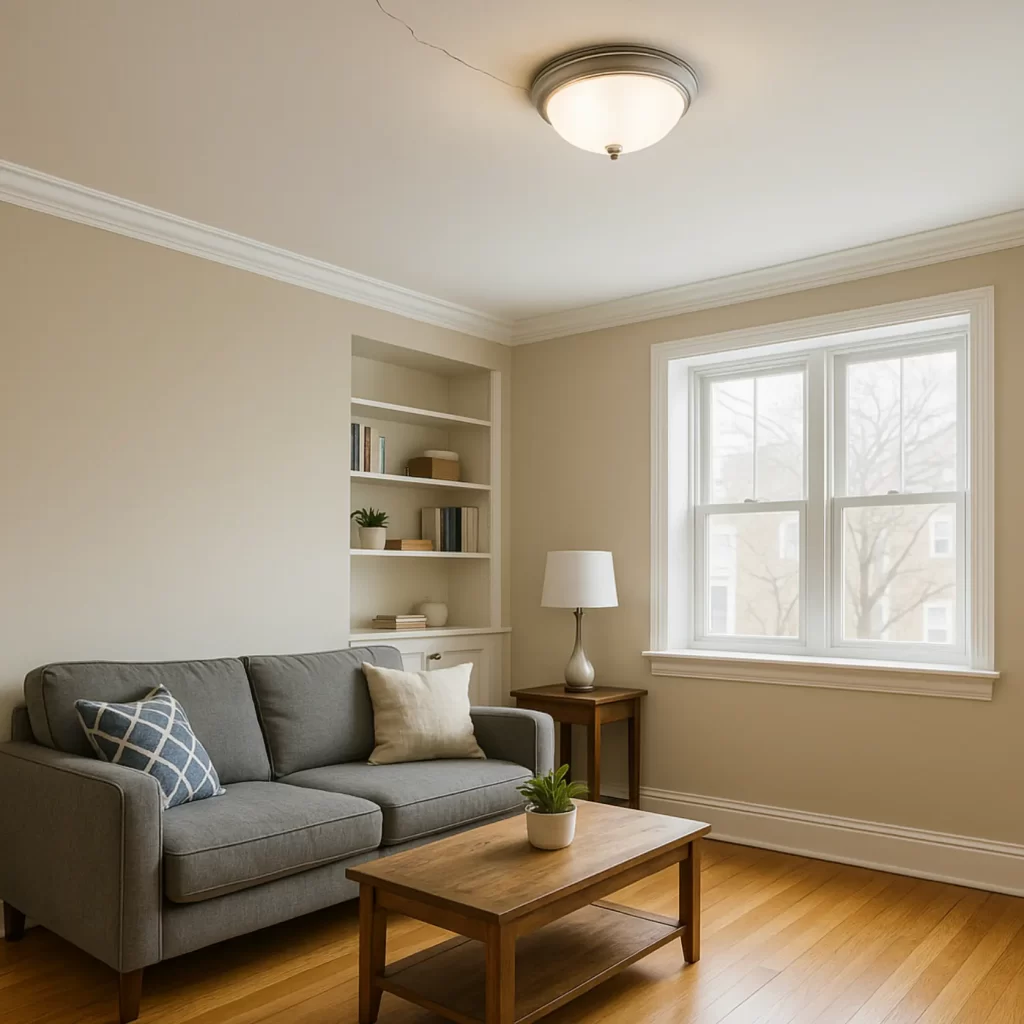
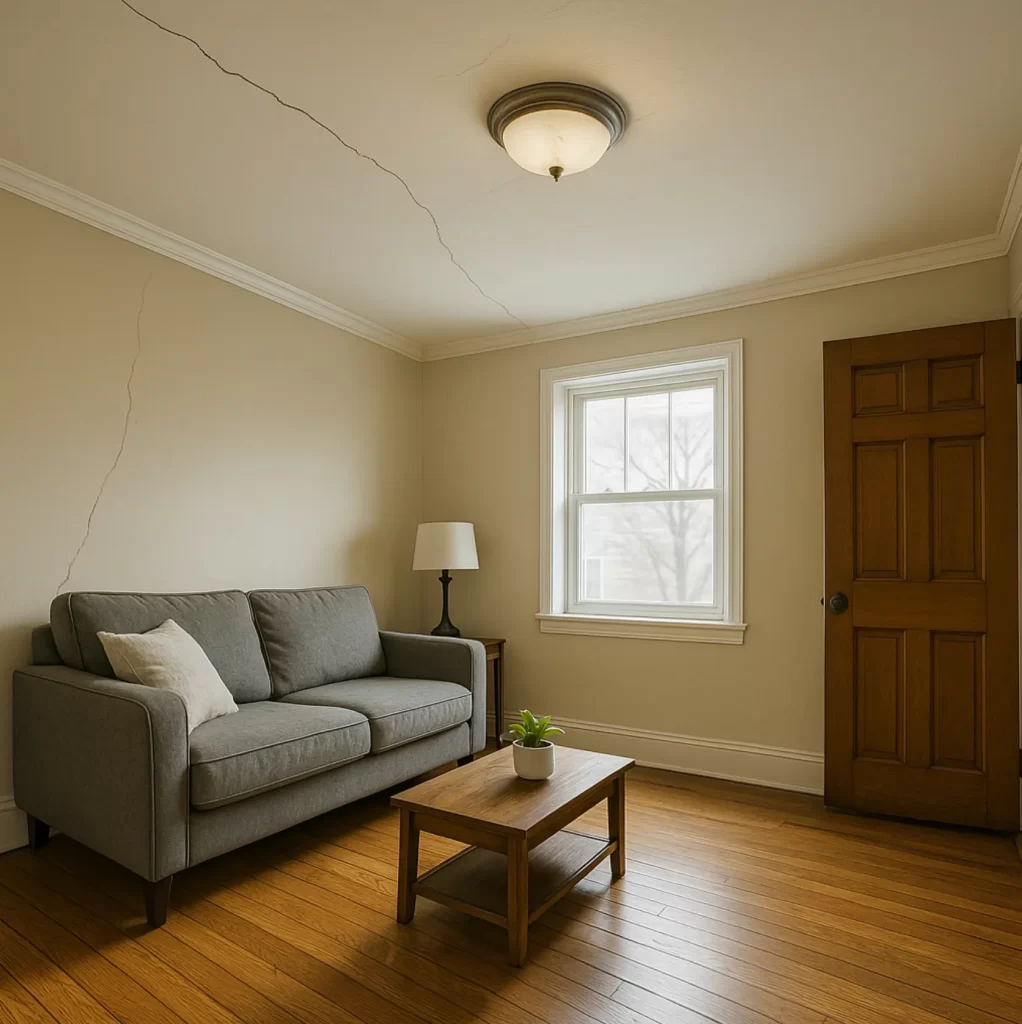
If a crack is wider than 1/8″, follows a diagonal or stair-step pattern, or appears alongside sloping floors or sticky doors — it’s time to investigate.
Some signs are purely cosmetic — especially small, hairline cracks caused by paint shrinkage or seasonal humidity changes. But others can be early indicators of structural stress, such as:
Some signs are purely cosmetic — especially small, hairline cracks caused by paint shrinkage or seasonal humidity changes. But others can be early indicators of structural stress, such as:
- Sagging ceilings, especially with visible dips in the center of the room
- Sloping or bouncy floors, particularly on the second story
- Interior doors or windows that suddenly stick, tilt, or don’t close properly
- Gaps opening up at crown molding or trim
- Cracks that are widening or recurring, even after patching
Why are these problems so common in the Philadelphia region?
The Philadelphia area presents unique challenges:
- Aging building stock: Many homes were built 50–100+ years ago using materials and framing methods that no longer meet modern code.
- Heavy soil movement: Areas like Newtown, Ambler, and West Chester experience freeze-thaw cycles and poor drainage, which lead to shifting foundations.
- Water intrusion: Moisture from old stucco, clogged gutters, or leaking roofs silently damages framing over time.
- Unpermitted or DIY renovations: Especially in flipped or rental properties, shortcuts can leave load paths unsupported.
Fun Fact
Homes built between 1950–1980 in the Philly suburbs often used undersized joists and beams, especially in finished basements or over large spans without sufficient mid-span support.
What does a structural engineer look for during an inspection?
A structural engineer will:
- Examine framing spans, support posts, joists, and any deflection
- Check for moisture-related deterioration (rot, mold, or rusted fasteners)
- Review any visible settlement or shifting in foundation walls
- Measure floor slope and ceiling sag with laser levels or string lines
- Identify whether the issue is urgent, cosmetic, or something to monitor over time
- Planning repairs
- Getting contractor quotes
- Selling your home
- Filing for permits
- Peace of mind
What should homeowners do if they see these signs?
If you notice multiple warning signs — or worsening symptoms — you should:
- Document the changes (photos, measurements, dates)
- Avoid cosmetic fixes until the structure is evaluated
- Schedule a structural inspection from a licensed professional
- Get repair recommendations and cost estimates
Pro Tip
“Cosmetic patching without understanding the cause is like painting over rust — it doesn’t solve the problem. Always start with structure first.”
Real Example: Sagging Floors in a Yardley Cape Cod
A homeowner in Yardley called us after noticing furniture slowly shifting toward one side of their living room. No visible cracks, but something felt off. Our inspection revealed a cracked support beam in the crawlspace — caused by moisture over decades. We engineered to reinforce the beam, add a proper footing, and the floor was restored to level without a full gut job.
Bottom Line: Listen to Your Home
Structural issues don’t always announce themselves loudly. Sometimes they whisper — through a crack, a slope, or a creaky board. And in the Philadelphia area, where so many homes carry decades of wear, it’s especially important to take these signs seriously.
Think You Might Have a Structural Issue? We Can Help.
Structure Professionals provides trusted, unbiased evaluations throughout the Philly metro region. Whether you’re seeing cracks, sags, or strange shifts — we’ll help you understand what’s happening and what to do next.
Don’t guess — get a professional opinion.
Contact us today for a fast, affordable structural assessment.
Don’t guess — get a professional opinion.
Contact us today for a fast, affordable structural assessment.